

Design professionals
Catch the contradictions between your drawings and specs before the tender.
↳ Telamont reads your specifications, your drawings and the other disciplines' documents together, finds what contradicts, and cites the exact article. You fix it while it still costs a revision.
Your risk
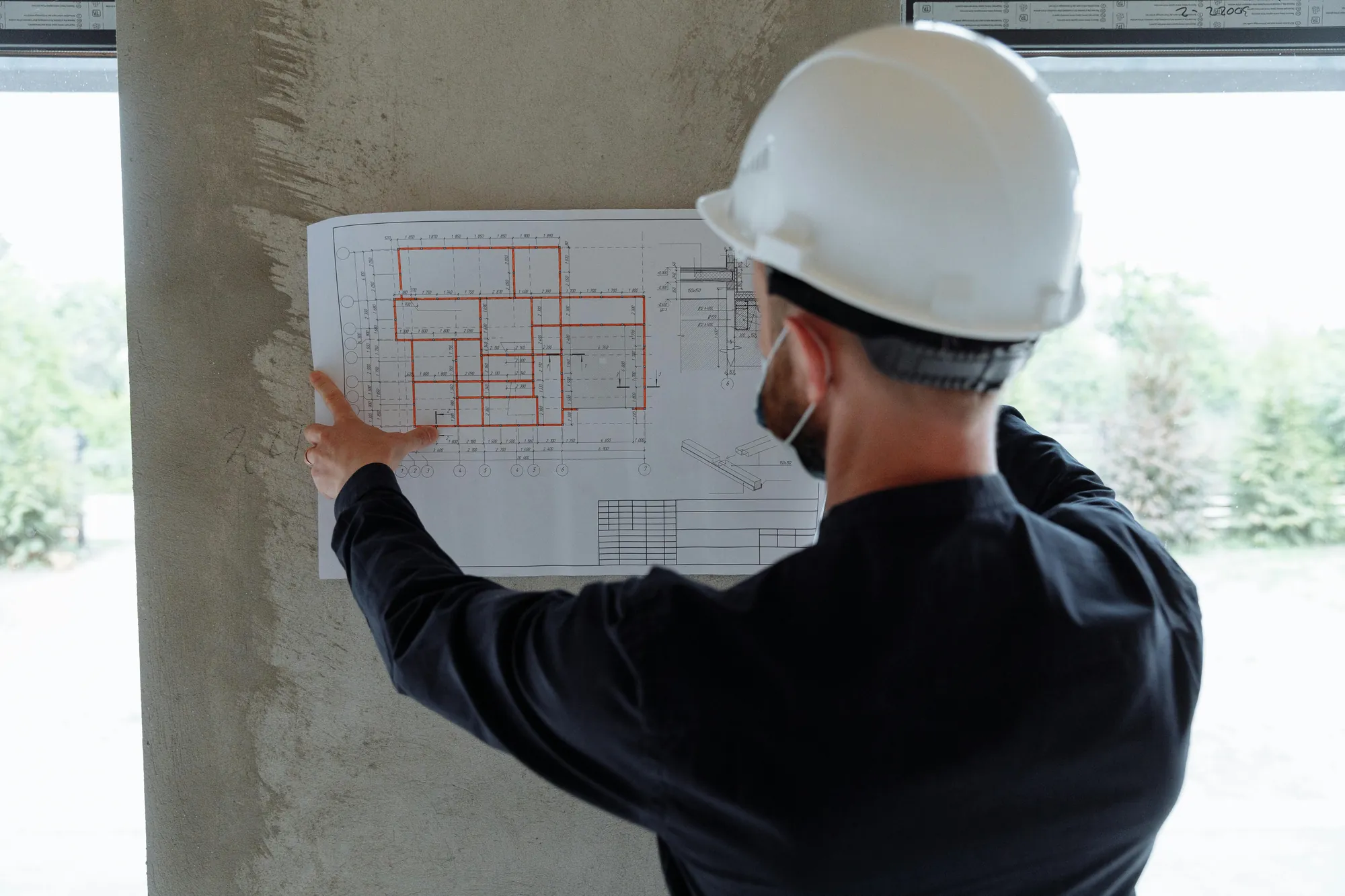
Your documents become the contractual reference for the project. Whatever contradicts between the specifications and the drawings gets settled on site, under pressure, and the question of liability comes back to you.
Telamont compares the specifications, the drawings and each discipline's documents, and shows what contradicts from one document to the next. Every gap is cited to its article.
Meanwhile the RFIs pile up. A contradiction left in the documents comes back as a site instruction, then as a change order.
Fewer addenda to issue
Fewer RFIs
Fewer change orders
Common risks
Contradictions that come back on site, project after project
[01]
A specification requirement that appears on no drawing.
[02]
An addendum that changes a section without fixing the cross-references.
[03]
A structural drawing that contradicts the architectural drawing.
[04]
A standard cited in an edition that is no longer in force.
[05]
A precedence clause that reverses the order of the documents.
[06]
An RFI response that contradicts the specifications.
FAQ
Questions architects and engineers ask about Telamont
How does Telamont find contradictions between drawings and specifications?
Telamont reads the specifications, the drawings and each discipline's documents together and compares what each one requires for the same element. When they disagree, it flags the contradiction and cites both the sheet and the article, so you can fix it before the tender. See risk detection and our guide to drawing and specification conflicts.
Can Telamont compare documents across disciplines?
Yes. Telamont compares the architectural, structural and building systems documents with each other and with the specifications, for example a structural drawing that contradicts the architectural drawing.
Does Telamont check addenda?
Yes. When an addendum changes a section, Telamont shows the cross-references and drawings that still point to the old requirement, so the addendum does not open a new contradiction.
Does Telamont flag outdated standards?
Yes. Telamont flags a standard cited in an edition that is no longer in force, so the specification refers to the edition that applies to the project.
Can Telamont check RFI responses?
Yes. Telamont checks an RFI response against the specifications and drawings and flags a response that contradicts them, before it becomes a site instruction. See RFIs.
Is our project data used to train AI models?
No. Customer documents are not used to train AI models, and the AI model providers Telamont works with retain none of the data they process. Our AI principles explain how data is handled.
How long does it take to get started?
A few days at most. The team connects the project documents or uploads them, and the first review runs right away.
The product
Explore the other features.





Contact

Product
Solutions