


Subcontractors
Know what binds you before you sign.
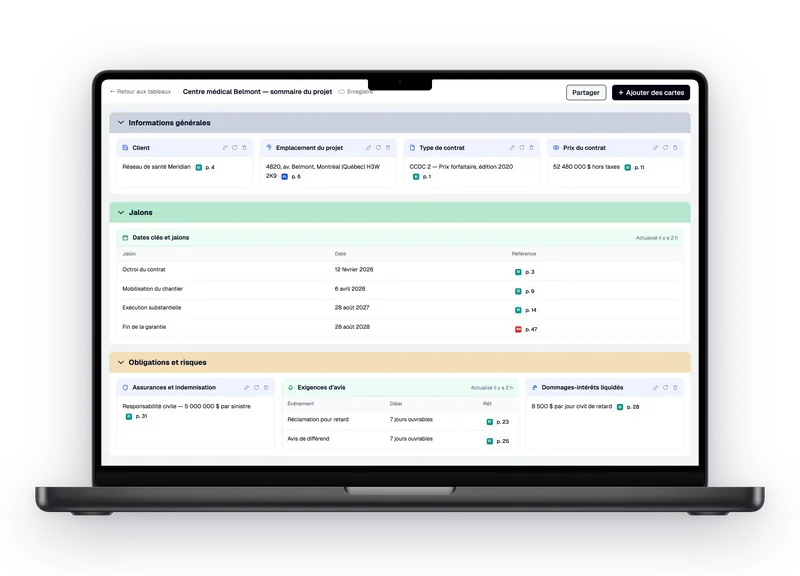
↳ Telamont reads your subcontract, the specifications, the drawings and your bid breakdown, and cites each obligation that reaches you to its exact article. You negotiate while it is still negotiable.

Your risk
You sign conditions written between the owner and the general contractor. They flow down to you by simple reference, and what you did not read, you carry anyway.
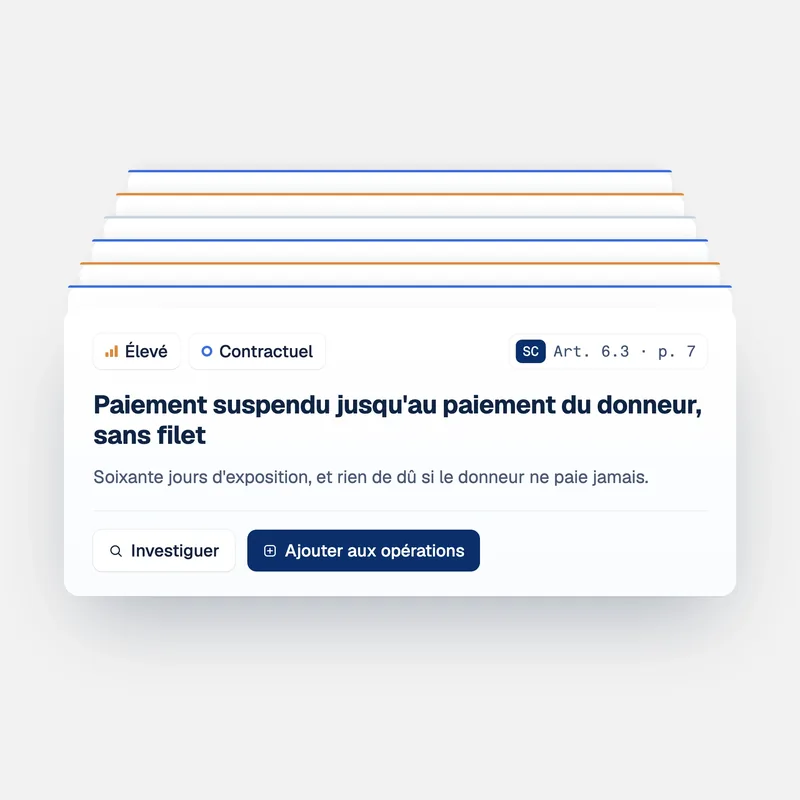
Telamont reads your subcontract and shows what flows down to you, including the clauses that bind you by simple reference. Gaps between the specifications, the drawings and your bid breakdown are cited to their article.
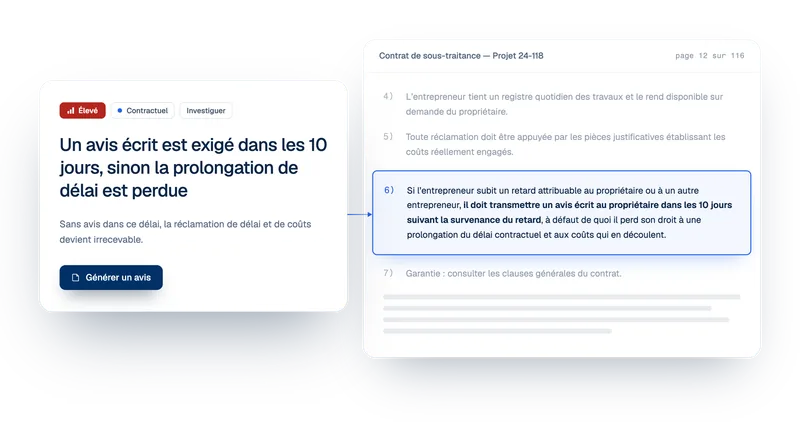
Meanwhile the notice deadlines are running, and yours are often shorter than the general contractor's. A late notice does not weaken your claim: it bars it.
Mechanical, electrical, structural, envelope
Lump sum, unit price, time and materials
No legal department required


The same reading of the contract for the whole team
[01]
Project manager
Knows what the subcontract requires without having to guess what the prime contract imposes, and can show it at the next coordination meeting.
[02]
Estimator
Sees what the specifications require and what your bid breakdown excludes before the price goes out, not after the change order is refused.
[03]
Foreman
Knows which obligation applies to the sequence under way, without calling the office.
[04]
Management
One standard of contractual control across every subcontract, instead of one per project manager.
Common risks
Conditions that flow down without anyone having read them
[01]
A prime contract clause that binds you by simple reference.
[02]
A notice deadline counted in days, not weeks.
[03]
A specification requiring work your bid breakdown excludes.
[04]
A warranty on your trade running well past completion.
[05]
A holdback or pay-when-paid clause buried in the general conditions.
[06]
A precedence order that puts the specifications above your shop drawings.
FAQ
Questions subcontractors ask about Telamont
Can Telamont review a subcontract before I sign it?
Yes. Load the subcontract with the prime contract it refers to, and Telamont shows what flows down to you, including the clauses that bind you by simple reference. Each one is cited to its article, so you can negotiate while the terms are still open.
How does Telamont find work my bid breakdown excludes?
Telamont reads the specifications and drawings for your trade alongside your bid breakdown. When the specifications require work your breakdown excludes or does not price, it flags the gap and cites the section, before the price goes out.
Does Telamont track the notice deadlines in my subcontract?
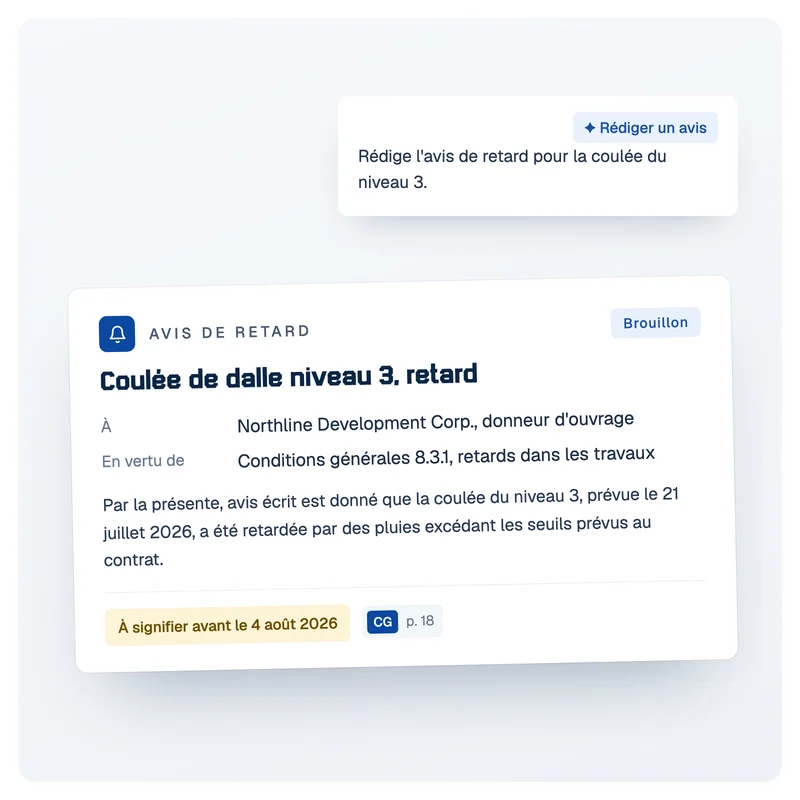
Yes. Telamont lists the notice requirements in your subcontract and in the prime contract it incorporates, which are often shorter than the general contractor's own, and shows the time left on each. Notice drafting then prepares the notice from the article.
Which trades and contract types does Telamont work with?
Telamont works for mechanical, electrical, structural and envelope trades, among others, and with lump sum, unit price and time and materials subcontracts. It reads every contract form, from standard forms to subcontracts written by the general contractor.
Do we need a legal department to use Telamont?
No. Telamont is built for the project managers, estimators and foremen who administer the subcontract. Each finding comes with the article it is based on, so the team acts on the text and brings in counsel only when a decision calls for it.
Is our project data used to train AI models?
No. Customer documents are not used to train AI models, and the AI model providers Telamont works with retain none of the data they process. Our AI principles explain how data is handled.
How long does it take to get started?
A few days at most. The team connects the project documents or uploads them, and the first review runs right away.
The product
Explore the other features.





Contact

Product
Solutions